By Angu Lesley
Football Writer,kick442.com-Cameroon
With David Pagou already doing the job and delivering results, the Ministry of Sports and Physical Education must explain the status of the vehicles, salaries and other privileges attached to the office of Indomitable Lions head coach.
There is something increasingly difficult to understand about the way Cameroon’s football authorities and government are handling the position of Indomitable Lions head coach. David Pagou is already doing the job. He is preparing the national team, selecting players, managing matches and delivering results. Cameroon have already secured qualification for the 2027 Africa Cup of Nations, with the team showing encouraging signs of progress. Yet, for reasons that remain difficult to explain, the man entrusted with this responsibility is still waiting to be given the full recognition, contractual security and working conditions that should accompany the position. How long must this situation continue?
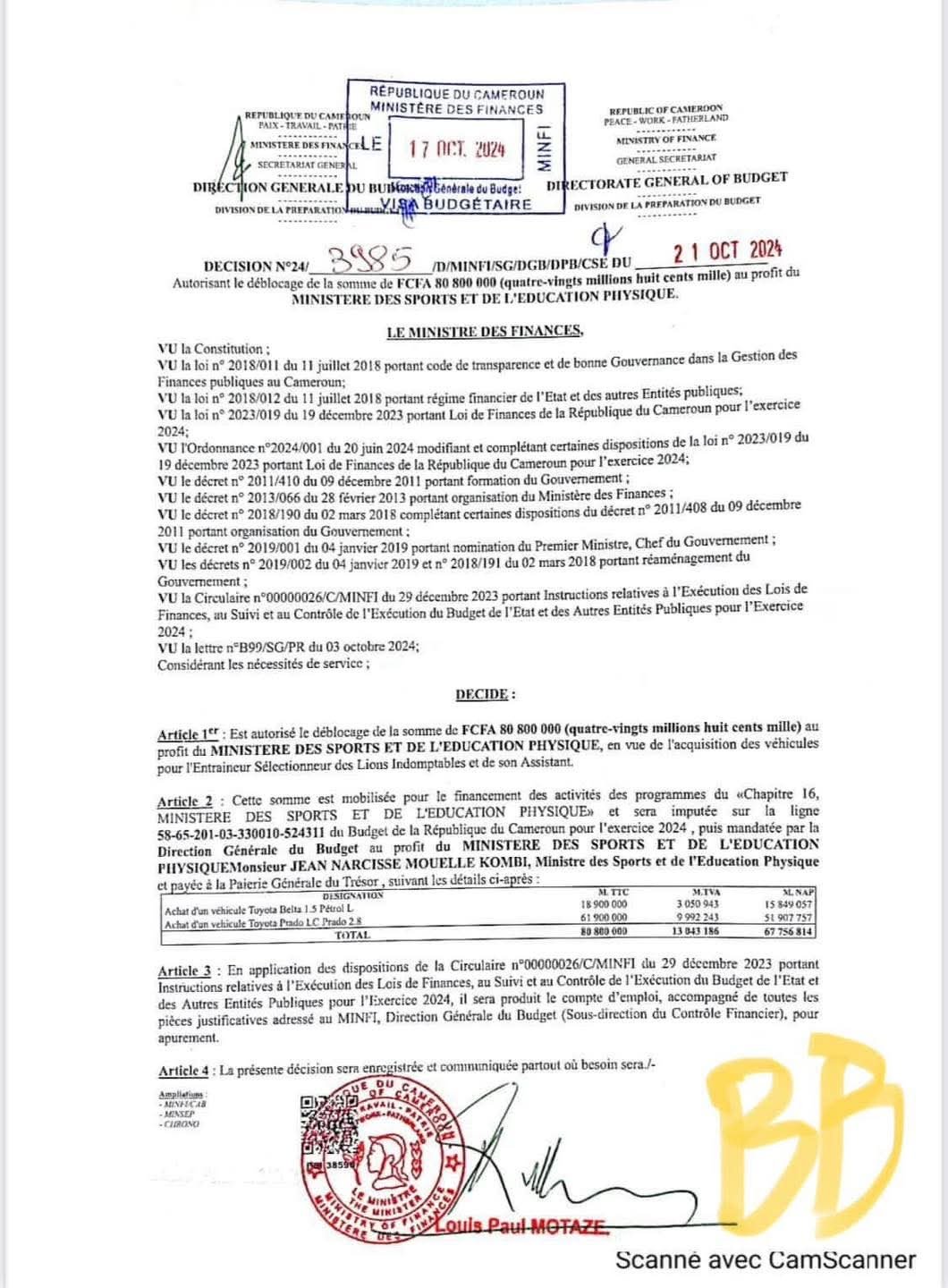
Perhaps the Ministry of Sports and Physical Education and the wider government bench should begin by answering a few questions about the privileges attached to the position of national team coach. On October 21, 2024, the Ministry of Finance issued Decision No. 24/3885/D/MINFI/SG/DGB/DPB/CSE, authorising the release of FCFA 80.8 million to the Ministry of Sports and Physical Education for the acquisition of vehicles for the Indomitable Lions head coach and his assistant. The decision specifically listed a Toyota Belta 1.5 petrol and a Toyota Prado LC Prado 2.8S. The document is clear about the authorisation. But where are those vehicles today? Were they acquired and handed to the previous coach, Marc Brys, as intended? If so, what has become of them since his departure? And if the vehicles were never acquired, what happened to the money authorised for that purpose? These are legitimate questions that deserve clear answers from the authorities.
The questions go beyond vehicles. The remuneration of the national team head coach is an annual budgetary responsibility of the State. The salary attached to the position is not supposed to disappear simply because one coach leaves and another takes over. It is understood that Marc Brys stopped receiving his salary more than three months ago, while Pagou has continued performing the same responsibilities. So what has happened to the money budgeted for the position during this period? Is it being retained in the State coffers, is it being used for another purpose, or is somebody else receiving the financial benefits attached to a position that Pagou is currently occupying in practice? The Ministry of Sports owes Cameroonians an explanation. More importantly, why should a man doing the job of national team head coach be denied the contractual and financial conditions that come with that responsibility?
Professor Cyrille Tollo Batoum, in an appearance on a television programme, reportedly argued that David Pagou was not yet the national team coach. That position might have been defensible from a strictly administrative standpoint at the time, but football does not operate on technicalities alone. Pagou has been entrusted with the team, has taken charge of competitive matches and has delivered the expected results. If he is good enough to lead the Indomitable Lions through their qualification campaign, why is he not good enough to receive the contract that formalises his appointment? Why must the country continue operating in this grey area? Whatever disagreements, institutional reservations or administrative considerations may have surrounded his appointment, perhaps it is time for all parties to climb down from their high horses. Cameroon needs a national team coach who is recognised, protected and adequately equipped to deliver, not a coach who must continually operate under the uncertainty of his employment status.
There is also the question of the resources available to Pagou in carrying out one of the most important responsibilities in Cameroonian football. Marc Brys had the opportunity to travel to Europe, observe players, meet them and engage with their clubs and the technical structures supervising their development. Why should Pagou not enjoy the same opportunities? Why should his scouting activities be largely restricted to the domestic scene when a significant proportion of Cameroon’s best footballing talents are playing across Europe and other parts of the world? Modern national team management goes beyond watching matches on television and receiving player reports. It involves building relationships with players, understanding their club situations, monitoring their physical condition, communicating with coaches and establishing a clear sporting direction. The coach needs the means to do all of this. If the government genuinely wants Cameroon to succeed, it must provide the resources and logistical support that make success more achievable.
But while the government and football authorities must do their part, Pagou himself cannot be exempted from scrutiny. His early work deserves encouragement, but there are sporting decisions that will require courage, diplomacy and a broader vision as the Africa Cup of Nations approaches. One of them is his relationship with some of the country’s more experienced players. The young group currently doing the job deserves enormous credit. They have brought energy, commitment and a refreshing sense of collective responsibility to the team. However, qualifying campaigns and major tournaments are different challenges. Africa Cup of Nations titles are rarely won on enthusiasm alone. Experience, composure, leadership and the ability to manage difficult moments are essential. Pagou must therefore find a way to open conversations with some of the established players who have, for one reason or another, fallen outside the team’s immediate plans.
The likes of André Onana, Zambo Anguissa, Christopher Wooh, Harold Moukoudi, captain of Greek Champions League side AEK Athens, Nouhou Tolo and Yvan Dibango of Austrian side LASK, among others, deserve consideration based on their current form, fitness, availability and suitability for Cameroon’s ambitions of consistently competing for and winning the Africa Cup of Nations. Their club performances and experience at the highest level could add another dimension to an already promising group. This is not an argument for abandoning discipline or compromising the coach’s authority. It is an argument for managing differences maturely in the interest of the national team. Sunday Oliseh, during his time as Nigeria coach, was famously outspoken about the standards of discipline and personal conduct he expected from his players, including his position on earrings. The broader lesson is that a coach must communicate his expectations clearly and establish a common understanding with his players. Even where there have been previous disagreements or disciplinary issues, an experienced player who can improve the team should not automatically become a lost cause. Pagou must be prepared to have difficult conversations, explain his philosophy and determine who is willing to buy into it.
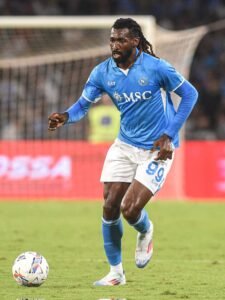
High-flying SSC Napoli of André-Frank Zambo Anguissa moved to the top of Serie A after getting a comfortable 2-0 win over Monza
The timing makes this particularly important. Cameroon have secured early qualification for the next Africa Cup of Nations, giving Pagou approximately eight months to build a team capable of competing for the continental crown. The remaining qualifying fixtures and the subsequent preparations should be used to broaden the squad, strengthen tactical understanding, assess the experienced players and develop the chemistry required for a major tournament. The current group has given Cameroonians reasons to believe again, but the final tournament will demand an even higher level of competitiveness. There is no reason to wait until the last minute to address these issues.
Ultimately, the government bench, especially the Ministry of Sports and Physical Education, must understand that supporting the Indomitable Lions is not limited to making public declarations about the importance of football. It requires practical decisions. Give David Pagou a proper contract. Pay him according to the responsibilities of the position. Provide the vehicles and other privileges attached to the office. Finance his scouting missions and give him the freedom and resources to engage with Cameroonian players abroad. Put him in a position where he can concentrate on building the strongest possible national team.
And to Pagou, the responsibility is equally clear: continue delivering, but do not allow early success to become an excuse for avoiding difficult decisions about the composition and competitiveness of the team.
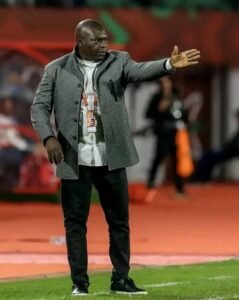
David Pagou dishing out tactical directives at AFCON 2025 in Morocco
Cameroon cannot continue demanding the results expected of a fully established national team coach while treating the man in charge as though he is merely occupying the position temporarily. If the country genuinely wants to win the next Africa Cup of Nations, the time to create the right conditions is now.
The question is no longer whether David Pagou is doing the job. He is. The question is why the institutions responsible for enabling him to do that job have not yet put everything in place.

 English
 French