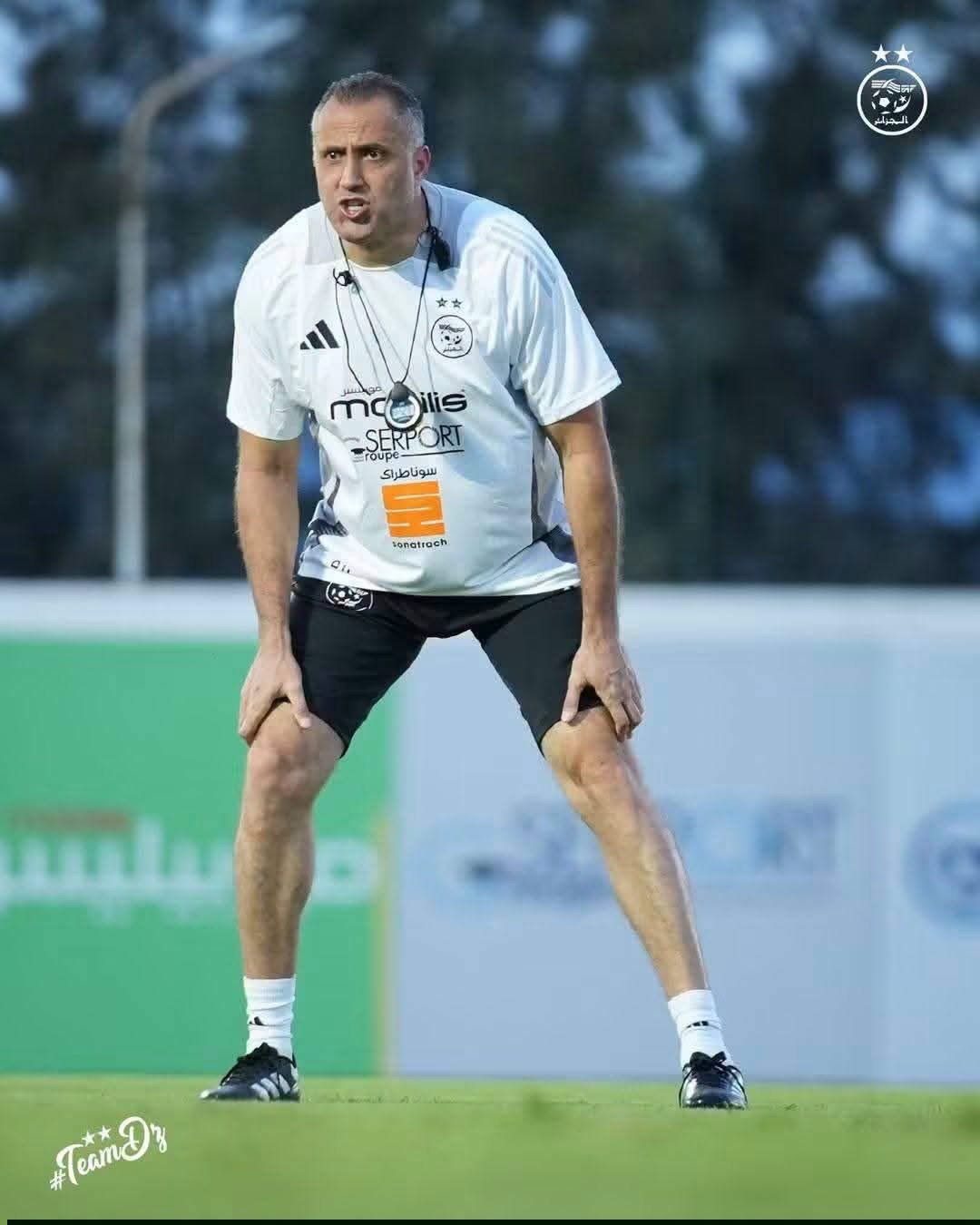
By Angu Lesley
Football Writer,kick442.com-Cameroon
The Algerian Football Federation (FAF) is reportedly considering ending its relationship with national team head coach Brahim Hemdani following the Desert Foxes’ humiliating 3-0 defeat to Togo in the 2027 Africa Cup of Nations qualifiers on Tuesday evening.
According to Algerian outlet DIA, a meeting at the FAF headquarters was expected on Wednesday, November 18, to determine the future of Hemdani and his technical staff. The federation is under increasing pressure to respond to the team’s disappointing performances and growing dissatisfaction among supporters.
Hemdani took charge of the national team in the post-2026 FIFA World Cup era, inheriting the responsibility of maintaining Algeria’s status among Africa’s leading football nations. However, his early spell has been characterised by inconsistent results, squad-management difficulties and questions about his ability to maintain unity within the group.
Algeria’s qualifying campaign has exposed some of those concerns. After opening with a 3-1 victory over Zambia, the Desert Foxes were held to a 2-2 draw by Burundi away from home. They subsequently beat Togo 1-0 at home before suffering a shocking 3-0 defeat in the return fixture in Lomé. The latest result has reduced their advantage at the top of Group I to just one point over Togo, with both teams having two matches remaining.
The problems have not been limited to performances on the pitch. Algeria recorded an extraordinary seven injury withdrawals during the November international camp for the double confrontation against Togo. Jaouen Hadjam, Rafik Belghali, Hicham Boudaoui, Bachir Belloumi and Amin Chiakha withdrew before the first encounter, while Ibrahim Maza and Anis Hadj Moussa subsequently joined the injury list after the 1-0 victory in Tizi Ouzou.
The unusually high number of withdrawals generated considerable debate in Algeria, with questions raised on social media about the circumstances surrounding the absences. Some supporters questioned whether every reported injury was genuine, while others wondered whether the training programme had contributed to the situation. Hemdani rejected suggestions that excessive training loads were responsible.
The growing uncertainty surrounding player availability, combined with disappointing performances and questions about collective commitment, has placed additional pressure on the coaching staff.
Following Tuesday’s defeat, Hemdani did not attempt to avoid responsibility. He admitted that Algeria had failed to meet expectations and criticised the team’s lack of commitment, revealing that he had warned his players about the intensity required for the encounter.
“I am the first person responsible for this defeat. There was no commitment from the players, even though I had warned them about it,” Hemdani admitted.
Asked about his future, the former Marseille midfielder remained cautious, insisting that his departure was not a decision within his control.
“My departure is not within my control. We suffered a defeat and did not meet expectations. I take responsibility for my choices,” he explained.
The situation presents the FAF with a difficult decision. Dismissing Hemdani could offer an immediate response to growing public frustration, but it would not necessarily resolve the wider issues surrounding squad management, player availability and the team’s performances.
There are also questions about the federation’s own responsibility in appointing and supporting the technical staff. Removing a coach without addressing the underlying problems could simply postpone another crisis.
For now, Algeria remain top of Group I with seven points, one ahead of Togo. However, following the events in Lomé, Hemdani’s future has become a major talking point, with the reported meeting at the federation’s headquarters potentially marking a decisive moment in his tenure.
The coming hours could determine whether the FAF continues with its current project or looks for another technical direction.

 English
 French