By Angu Lesley
Football writter kick442.com – Cameroon
There are football careers that follow a predictable ladder — and then there are journeys like Dimitri Lipoff’s, shaped less by geography and more by adaptability.
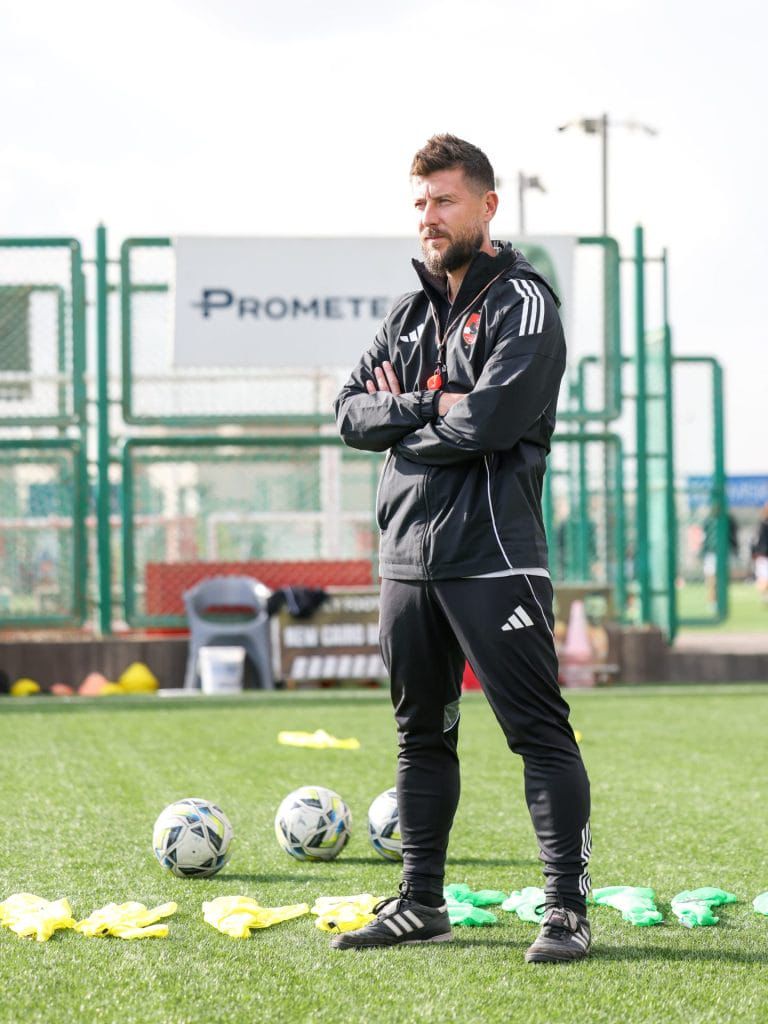
Cameroon’s decision to appoint the French coach as Technical Coordinator of the women’s national team setup — working alongside head coach Valentine Nguele — signals more than a staffing change. It hints at a shift in philosophy.
This is not a routine arrival. It is the introduction of a coach whose career has been built in different football worlds, often in projects where structure had to be created before success could even be measured.
From Lyon to Paris, from Russia to China, and later into North Africa, Lipoff has moved through women’s football environments with a clear pattern: join, organise, compete, and leave systems stronger than he found them.
His early grounding in France’s elite women’s football ecosystem, including roles around Olympique Lyonnais Féminin and Paris Saint-Germain Féminine, placed him close to some of the most advanced structures in the game. But it was outside Europe where his coaching identity sharpened.
In China, with Wuhan Jianghan University Women’s Football Club, he stepped into a demanding head coach role and delivered consecutive league titles in 2020 and 2021 — proof that his methods translated beyond familiar environments.
Later, at Al Ahly Women, he was entrusted with something even more delicate: a new project carrying the weight of expectation from one of Africa’s biggest clubs. There, the mission was not only results, but identity-building — laying foundations, shaping playing principles, and helping a young structure find direction. The team’s early success in domestic competition reflected that groundwork.
Now, Cameroon becomes his latest challenge — but this time in a different capacity.
As Technical Coordinator, Lipoff is not expected to be the day-to-day voice on the touchline. Instead, his influence is designed to sit above the immediate match cycle: structuring methodology, aligning coaching staff, improving development pathways, and helping bridge the gap between talent and elite performance.
Working alongside head coach Valentine Nguele, his role suggests a shared leadership model — one that blends local understanding with international experience.
For Cameroonian women’s football, which continues to carry both ambition and expectation on the continental stage, this appointment represents intent. Not just to compete, but to modernise the way the team is built from within.
Lipoff’s career has never been defined by staying in one place long enough to become comfortable. It has been defined by adaptation — and the ability to leave something behind that lasts after the results are forgotten.
Now, the question shifts. Not what he has done elsewhere — but what Cameroon’s women’s football can become with that experience embedded into its structure.

 French
  English