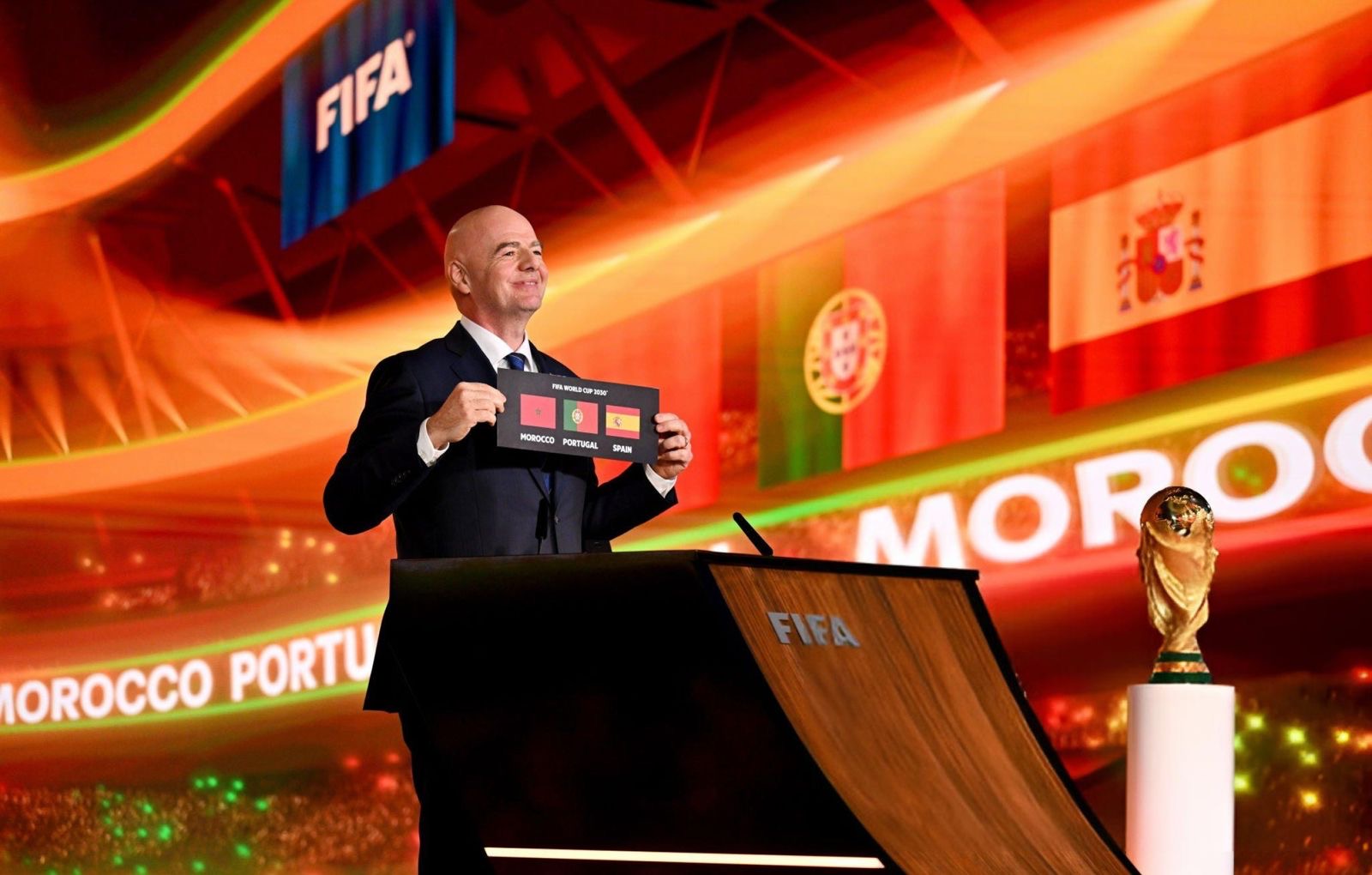
Morocco’s 2027 draft finance bill sets out a dedicated FIFA-related tax regime to support the 2030 World Cup, which the country will co-host with Spain and Portugal. Contrary to a common reading, the measures are not limited to football’s world governing body. They could also benefit qualified national federations, their players and other stakeholders involved in the tournament, African teams included.
The proposal builds on an existing framework. Since 2025, FIFA’s offices in Morocco have enjoyed a specific tax regime. The 2027 draft finance bill now proposes to extend its scope to World Cup activities and related events. It covers all six FIFA confederations, namely UEFA, CAF, CONCACAF, CONMEBOL, AFC and OFC, for their eligible activities and operations.
For African football, this inclusive approach has real practical value. The Confederation of African Football and its member associations whose teams qualify fall within the scope of the proposed provisions on the same footing as their counterparts from other continents. The bill provides in particular for exemptions from corporate income tax, certain withholding taxes, VAT and registration duties, as well as customs relief on sporting and technical equipment imported for the tournament.
The regime is also designed to last. Some measures could apply until the end of 2032, and the bill provides a permanent regime for a social Legacy Fund, so that the effort made for 2030 leaves a lasting mark beyond the competition itself.
These preparations come as Morocco is already hosting a FIFA tournament. Rabat is staging the U17 Women’s World Cup from 17 October to 7 November, bringing together 24 teams for 52 matches in a centralised format, with facilities dedicated to women’s football and a fan zone around the event. The two matters remain legally separate, as the measures proposed for 2030 are not the tax regime of the current U17 tournament, but together they show Morocco’s growing role as a host of world football.
The 2027 draft finance bill must still be reviewed and adopted by Parliament. The proposed benefits do not amount to a blanket exemption: only operations meeting the conditions of the final text would qualify, and not all expenses or income would be automatically covered.

 English
 French