By Angu Lesley
Football Writer,kick442.com-Cameroon
The transformation of women’s football in Cameroon over the last six years has been remarkable, and one institution that deserves considerable recognition for its contribution is Guinness. From improving the financial conditions of players to equipping clubs, supporting competitions and giving the women’s game greater visibility, the beverage company has remained a consistent partner in the development of the sport.
The partnership officially began on November 13, 2020, when Guinness Cameroon and the Cameroon Football Federation (FECAFOOT), under the leadership of then president Seidou Mbombo Njoya, signed an agreement that gave the country’s top-flight women’s championship a new identity: the Guinness Super League. It was more than a change of name. It represented a significant attempt to give women’s football the professional structure, financial attention and commercial visibility it had long lacked. At the time, one of the major breakthroughs was the introduction of monthly payments for the 300 players competing in the championship. The arrangement also included equipment support for the 12 participating clubs. It was an important intervention in a football environment where players had often struggled to receive regular financial rewards for their work.
When Samuel Eto’o’s executive took over at FECAFOOT, the partnership was maintained, with Guinness continuing to play a central role in the development of the championship. The second season brought further improvements, including an increase in the minimum monthly remuneration of players to FCFA 100,000, jointly financed by Guinness and FECAFOOT. Clubs also benefited from financial support, while prize money and individual recognition became increasingly important features of the competition. Over successive seasons, the Guinness Super League has evolved into more than just a championship. It has become an increasingly structured platform through which players can earn a living, develop their talents and attract attention from clubs beyond Cameroon’s borders.
The impact is now visible in the achievements of Cameroonian women’s football. The country has produced players who have used the Guinness Super League as a platform to secure opportunities abroad and build professional careers. Marie Gisele Divine Ngah Manga, Naomi Ndjoah Eto, Nina Soufiya, Brenda Tabe and other emerging talents are among the names associated with the growing international profile of Cameroonian women’s football. The movement of players into professional environments in Europe and the United States demonstrates the increasing value of the domestic championship as a talent-development platform. Importantly, the league has also provided a competitive environment in which established internationals and emerging youngsters can develop side by side.
The progress has not been limited to individual players. At club level, Lekié Football Filles have delivered a historic milestone by becoming the first Cameroonian club to reach the final tournament of the CAF Women’s Champions League. Their remarkable debut campaign in Egypt culminated in a bronze medal on November 14, 2026, following a convincing 5-0 victory over Uganda’s Kawempe Muslim Ladies. At national-team level, the Indomitable Lionesses finally ended decades of waiting by winning their maiden Women’s Africa Cup of Nations title in August 2026. Their 3-0 victory over Malawi in the final in Rabat, Morocco, was a historic moment for the country and a powerful demonstration of the progress of women’s football. These achievements have several contributing factors, including the work of players, coaches, clubs, FECAFOOT and other stakeholders. However, the importance of having a sustained domestic competition backed by a committed commercial partner cannot be overlooked.
Guinness has also understood that developing women’s football requires more than simply providing money. Visibility, recognition and the overall experience of the competition matter. The introduction of the Guinnessico concept, individual player awards, support for clubs’ digital transformation and recognition of the most disciplined clubs on digital platforms have helped give the championship a stronger identity. Television exposure, promotional activities and the celebration of outstanding performances have also contributed to bringing women’s football closer to supporters. For players who previously competed with limited public attention, the opportunity to be recognised, celebrated and followed by a growing audience represents an important step forward.
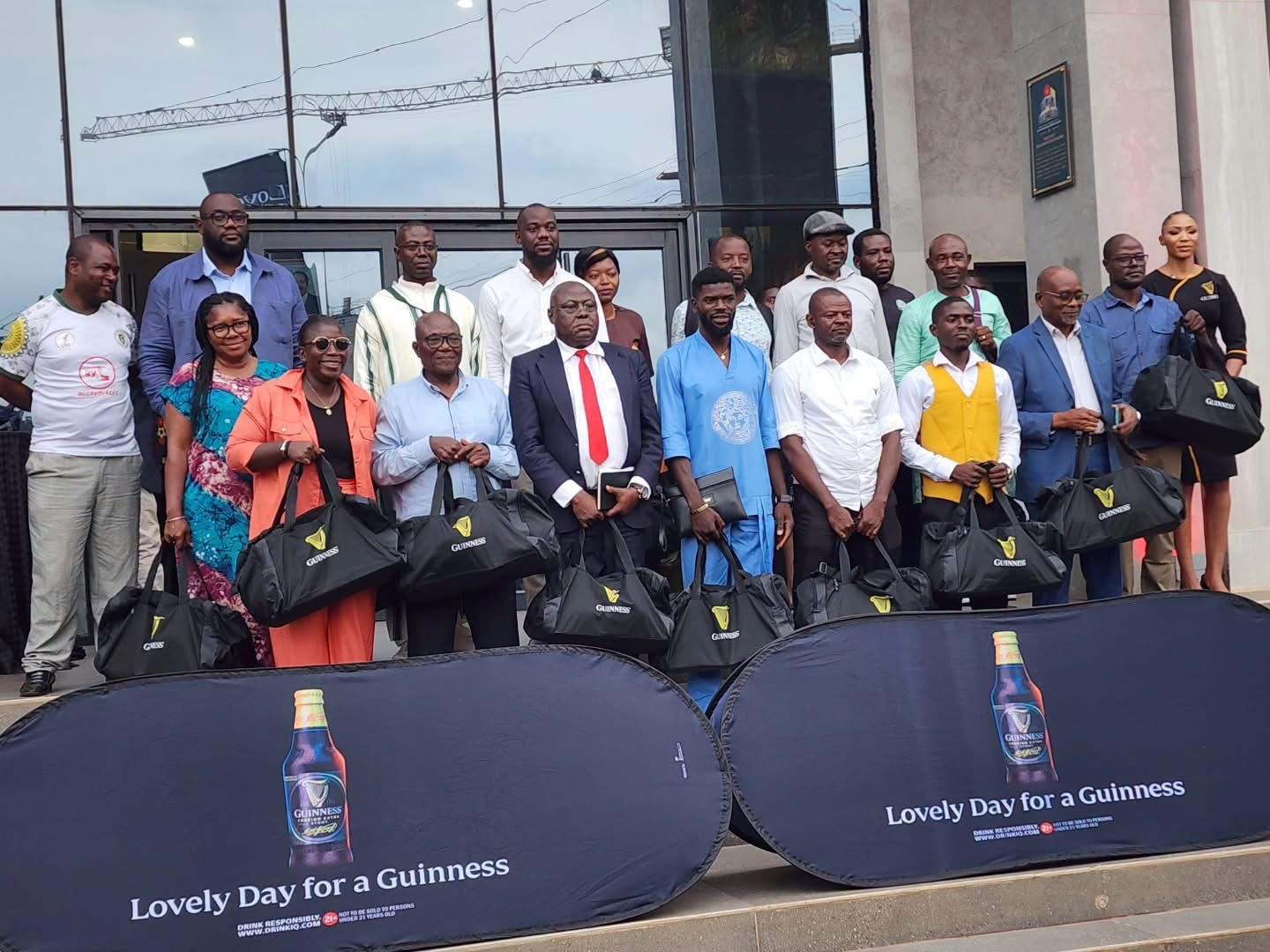
That commitment is again evident ahead of the seventh season, with Guinness unveiling its programme, One Season, 12 Commitments. The package covers monthly bonuses for 300 players, equipment support for the 12 clubs, subsidies for clubs, rewards for the top three teams, assistance to clubs participating in international competitions, individual awards for outstanding Guinnessico performers, recognition of the best players, incentives for clubs demonstrating discipline on digital platforms, support for digital transformation, sponsorship-related support for FECAFOOT and the Ballon d’Or, product donations and special experiences for women’s football supporters through the Lovely Day for a Guinness initiative. The latest equipment allocation includes 300 footballs, 600 jerseys, 300 sports bags and 300 travel bags for the participating clubs.
Six years after the partnership was signed, the Guinness Super League has established itself as one of the most visible and increasingly reliable football competitions in Cameroon. There are still challenges to overcome, particularly in improving club infrastructure, increasing attendances, strengthening youth development and ensuring that players enjoy sustainable professional careers. But the difference between where the women’s game stood before November 2020 and where it stands today is difficult to ignore.
Guinness has helped create an environment in which female footballers can dream beyond domestic competition, where clubs can aspire to continental recognition and where the national team can draw from an increasingly competitive pool of talent. From the Seidou Mbombo Njoya administration that initiated the partnership to the Samuel Eto’o executive that has maintained it, continuity has been essential.
The first WAFCON crown, Lekié FF’s historic continental bronze and the growing number of Cameroonian players making their mark abroad are important chapters in this journey. The Guinness Super League has become a significant part of that story, and its continued development could prove even more important to the next generation of Cameroonian female footballers.

 French
 English