Angu Lesley
Football writer kick442.com – Cameroon
A Swift Fall from Grace
Football is often a results-driven business, but the speed with which fortunes can change remains astonishing.
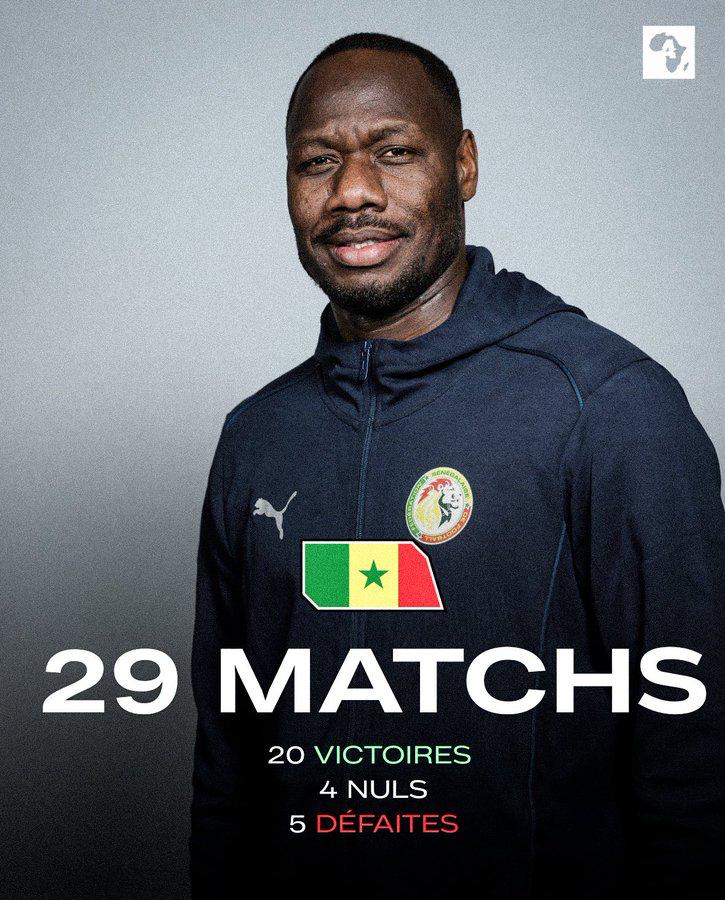
Just months after being celebrated as the coach who led Senegal to Africa Cup of Nations glory in Morocco, Pape Bouna Thiaw is now on his way out as head coach of the Teranga Lions. On Saturday, the Senegalese Football Federation (FSF) announced that its Executive Committee had decided to begin the process of terminating Thiaw’s contract, along with that of his entire technical staff, following Senegal’s elimination from the 2026 FIFA World Cup.
The federation explained that the decision followed an assessment of the team’s sporting performances and future prospects, while also mandating its president to oversee a “true reorganization” of all national teams. A press conference has been scheduled to explain the decision and outline the federation’s vision for the future.
While the statement appears clear, it leaves behind a far more complex debate.
The Man Who Restored Belief
When Pape Thiaw succeeded Aliou Cissé, he was viewed as the natural continuation of Senegal’s successful football project.
Having already guided Senegal to CHAN success and served within the national team setup, Thiaw understood the expectations that come with managing one of Africa’s football powerhouses.
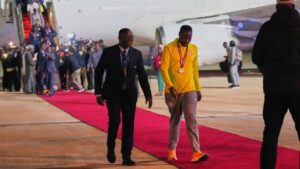
Earlier this year, he appeared to justify that confidence by leading Senegal through an unforgettable AFCON campaign in Morocco. Throughout the tournament, players and supporters praised his leadership, tactical discipline and ability to unite the squad during difficult moments.
Even after the controversial conclusion to the final, many Senegalese continued to see him as the coach who fought alongside his players and brought continental glory to the nation.
For many supporters, Thiaw was more than a coach—he became the symbol of Senegal’s resilience.

One Tournament Changed Everything
The World Cup, however, told a different story.
Senegal entered the tournament carrying the weight of continental champions but failed to replicate their AFCON performances. Their campaign came to a heartbreaking end after surrendering a two-goal lead in a dramatic 3-2 extra-time defeat to Belgium in the Round of 32.
There is little doubt that questions can be asked about Thiaw’s tactical approach, substitutions and game management, particularly during the closing stages against Belgium.
Every national team coach is ultimately judged by performances on the biggest stage.
Yet the question remains whether one disappointing World Cup should erase everything achieved only months earlier.
Is the Federation Avoiding Bigger Questions?
The wording of the FSF communiqué deserves careful attention.
Rather than simply announcing the dismissal of the coaching staff, the federation acknowledged the need for a “true reorganization” of Senegal’s national teams.
That admission suggests the problems extend beyond the dugout.
Successful football nations are not built solely by coaches. Long-term success depends on strong administration, effective planning, youth development, medical structures, logistics, communication and leadership at federation level.
If a complete reorganization is required, then responsibility cannot rest exclusively on Pape Thiaw.
The federation must also examine its own role in the events that led to Senegal’s disappointing World Cup campaign.
Changing the Coach Is the Easy Part
Throughout football history, changing the coach has often been the quickest response to public disappointment. It creates the appearance of decisive action while allowing deeper structural problems to remain largely untouched.
If Senegal’s difficulties stem from issues within squad management, preparation, communication or long-term planning, replacing one individual may do little to solve the underlying problems.
The federation’s upcoming press conference therefore becomes crucial. Supporters deserve more than an announcement confirming that a coach has been dismissed.
They deserve a clear explanation of what went wrong, what lessons have been learned and how the promised reorganization will strengthen Senegalese football beyond simply appointing another manager.
The Weight of Expectations
Managing Senegal is unlike managing most African national teams.
With stars competing in Europe’s biggest leagues and a generation widely considered capable of challenging the world’s elite, expectations have risen dramatically.
Anything short of sustained success is often viewed as failure.
Those expectations undoubtedly increased after the AFCON triumph, making the World Cup elimination even more painful for supporters.
But high expectations should also apply to those leading the federation, not only the man standing on the touchline.
How Should Pape Thiaw Be Remembered?
History rarely judges coaches solely by one tournament.
Pape Thiaw inherited enormous expectations and, within months, delivered what many believed was another chapter in Senegal’s football success through the AFCON campaign.
His World Cup ended in disappointment, and criticism of certain tactical decisions is entirely justified.
However, portraying him as the sole architect of Senegal’s failure risks overlooking broader institutional shortcomings that the federation itself has now acknowledged through its call for a complete reorganization.
If that reorganization leads to meaningful reform, Thiaw’s departure may be remembered as the beginning of a new era.
If nothing changes beyond the name of the head coach, many may conclude that the former AFCON-winning manager became the easiest target for problems that extended far beyond the technical area.

 French
  English