By Boris Esono
Sportswriter, Kick442.com-Cameroon
The future of sports journalism is no longer something to prepare for tomorrow; it has already arrived.
From artificial intelligence transforming newsrooms to the growing demands of covering global sporting events, sports reporters are increasingly expected to do more than simply report match results. Sports journalists are expected to produce compelling stories, verify digital content, embrace emerging technologies and compete on an international stage.
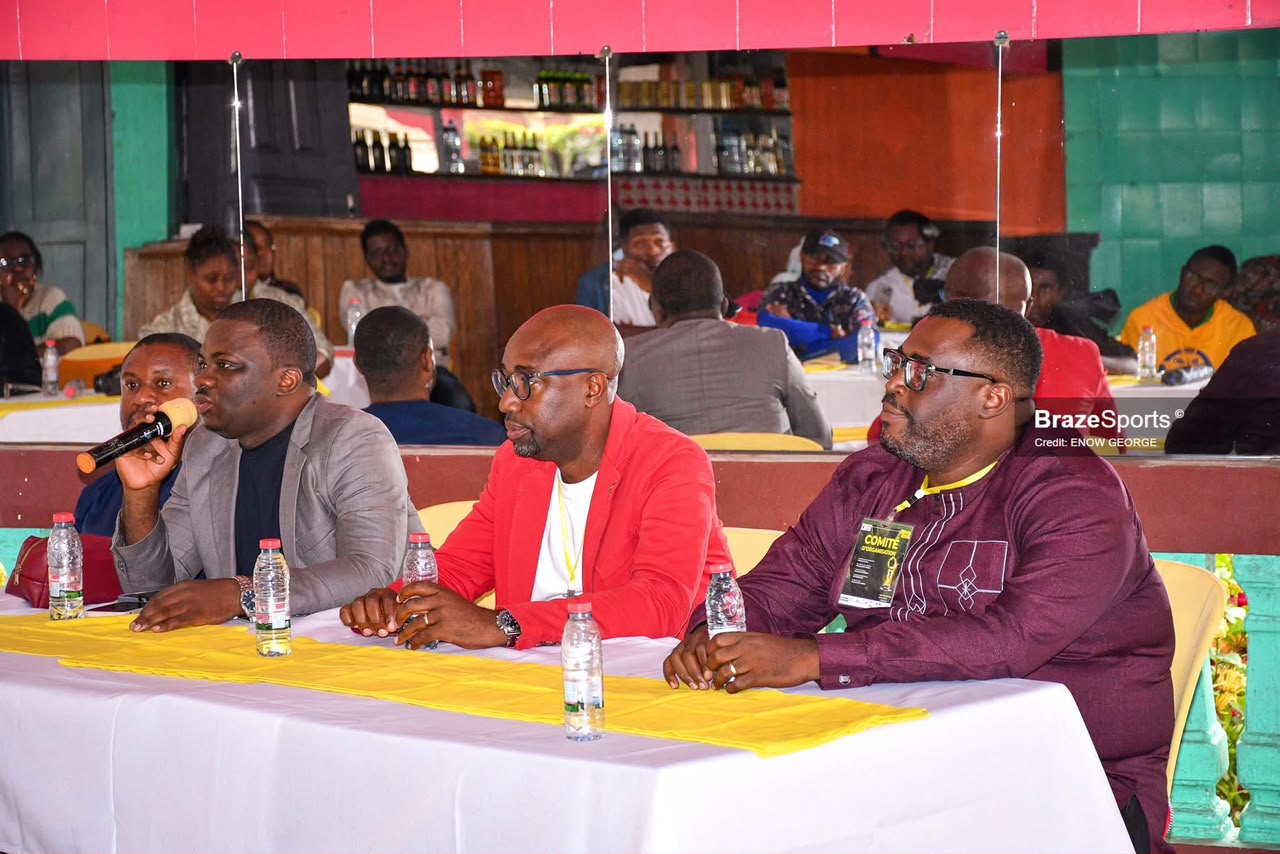
It was against this backdrop that sports journalists from across the South West gathered at Lady L Hotel in Buea on Wednesday, July 8, for a capacity-building workshop organised by the Cameroon Association of Sports Journalists (CASJ), known in French as Association Des Journalistes Sportifs Du Cameroun (AJSC).
The training was attended by AJSC/CASJ National President Ekounga Wenang, Vice President Angu Lesley Akonwi, CASJ South West Regional President Edward Lyonga Muambo, former CAF and FECAFOOT Communications Director Junior Binyam, as well as several sports journalists from Buea, Limbe and Douala.
During the training, two major themes took centre stage: “Sports Journalism in a Changing Global Landscape: Learning from the 2026 FIFA World Cup and Planning for Future Events” and “Sports Journalism and Artificial Intelligence: Opportunities, Limits and Responsibilities.”
AI Is a Tool, Not a Threat
Digital and Artificial Intelligence expert Rikiatou Kabir encouraged journalists to embrace emerging technologies, describing artificial intelligence as a powerful assistant rather than a replacement for human journalism.
She noted that AI applications have significantly improved productivity by helping journalists generate ideas, organise information and support multimedia production.
Journalists have this fear that AI will replace them, but AI cannot replace them,” Kabir said. “AI is their assistant, so they need AI for their everyday work.”
She, however, cautioned participants against relying blindly on AI-generated content. According to her, journalists must remain vigilant about copyright issues, especially when using AI-generated images and other creative materials.
They have to make sure that all the images they use are from publishers where they have the right to use them. You cannot simply trust everything AI produces,” she explained.
Kabir also stressed the importance of originality in journalism. “When using AI, you must not just copy and paste. You have to maintain your identity as a journalist. Everything you obtain through AI should be verified before publication.”
The sports journalists in attendance were introduced to practical AI tools including ChatGPT, Claude and Gemini, with demonstrations on how the platforms can assist in research, writing, editing and content creation while maintaining journalistic ethics.
Preparing for the Global Stage
CAF Media Officer and CASJ Vice President Angu Lesley Akonwi urged sports journalists aspiring to cover international competitions to prepare themselves long before tournaments begin.
He stressed that journalists represent not only their media organisations but also their countries whenever they travel abroad for assignments. When journalists travel to tournaments, they are representing their media houses and also representing their country,” he said. “How we conduct ourselves reflects on Cameroon.”
Akonwi challenged journalists to invest in their own professional development by building networks, understanding accreditation procedures, studying immigration requirements and familiarising themselves with the weather and security conditions of host countries.
He encouraged journalists to attend major competitions with the ambition of producing exclusive stories capable of attracting international attention. “When I attended tournaments as a journalist, my personal challenge was always to break stories that other journalists would quote,” he said. “That comes through preparation, relationships and access.”
He also appealed to media owners to invest more in sports journalism by supporting reporters with travel opportunities to international sporting events. Our employers should give us opportunities beyond local content. If a journalist becomes a global reference through a media organisation, the credit also comes back to that organisation,” Akonwi noted.
Keep the Spotlight on the Game
Former CAF and FECAFOOT Communications Director Junior Binyam challenged sports journalists to concentrate on the essence of sports reporting rather than administrative controversies. “Focus on the footballers and the coaches, not the administrators,” he advised.
His remarks encouraged sports journalists to prioritise compelling sporting stories that celebrate athletes, competitions and performances while maintaining professionalism in their reporting.
Discussions also centred on professional development, including information on obtaining CASJ and the International Sports Press Association (AIPS) membership cards. CASJ National President Ekounga Wenang announced that the cost of obtaining CASJ and AIPS membership cards has been significantly reduced, making international affiliation more accessible to sports journalists in the South West.
Journalists were equally encouraged to submit entries for the second edition of the AJSC/CASJ Awards, scheduled for July 12, with Ekounga Wenang promising attractive prizes for outstanding sports reporting.

 French
  English