Back in time, physicality was a reference in the African game and a factor in the relatively low goal-scoring rates in some matches.
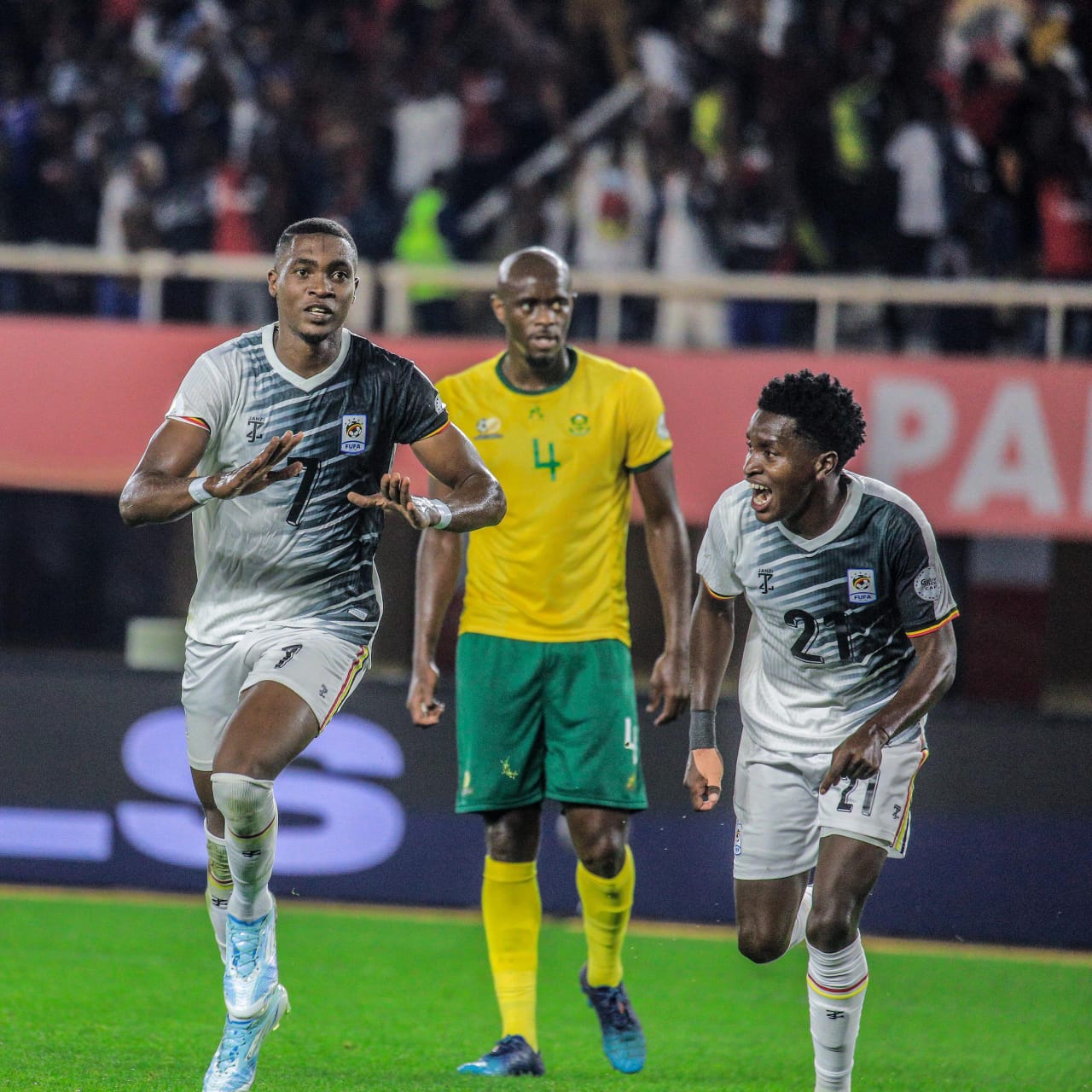
Uganda’s 3-3 against South Africa was a gentle reminder of the continent’s quality going forward.
Many African teams prioritized defense, an approach that affected the attacking end.
Even with talented forwards, teams generally struggled to convert chances into goals. It was attributed to various factors, but sole reliance at the defensive end was the continent’s relative trademark.
As time has evolved, so has African teams and their ability to finish with the goals per game ratio improving drastically.
Burkina Faso’s 4-2 win over the Central African Republic is the highest scoring game so far in this edition of the TotalEnergies CAF CHAN. However, there has only been one nil-all tie (Madagascar against Mauritania) in a deadrubber group B game, which takes us back to the tournament’s inception and evolution of how goals now come quick and fast in major Confédération de Football Africaine “CAF” competitions.
The Evolution of Goals in the TotalEnergies African Nations Championship (CHAN)
The TotalEnergies CAF CHAN has undergone significant changes since its Introduction in 2009. One key aspect that has evolved over the years is the number of goals scored in each tournament.
Early Years: High Scoring Matches (2009-2011)
In the early years of TotalEnergies CAF CHAN, matches were characterized by a high number of goals scored. In 2009, 51 goals were scored in 16 matches, with an average of 3.19 goals per match. This trend continued in 2011, with 59 goals scored in 16 matches, resulting in an average of 3.69 goals per match. These high-scoring matches showcased the attacking prowess of African teams and the excitement of the tournament.
Expansion and Shift in Style (2014-2016)
As the tournament expanded to 32 matches in 2014, the number of goals scored increased to 82. However, the average goals per match decreased to 2.56. It continued in 2016, with 78 goals scored in 32 matches, resulting in an average of 2.44 goals per match. This shift could be attributed to teams adapting to the tournament format and employing testing different strategies.
Tighter Defense (2018-2022)
In 2018, the number of goals scored decreased further, with 58 goals in 32 games, resulting in an average of 1.81 goals per match. The ratio suggests that teams adopted another approach, prioritizing clean sheets over attacking flair. However, in 2020 and 2022, the average goals per match increased slightly, with 2.28 and 2.31 goals per match, respectively. It was a more balanced approach, with teams focusing on both defense and attack.
Between 2009-2022, the TotalEnergies CAF CHAN saw a total of 475 goals scored in 192 games.
Two games, seven-goals thriller
No doubt that Morocco has been involved in high scoring games and a bitter-sweet experience between those two in 2014 (Morocco against Nigeria) where the home-based Atlas-Lions lost to Nigeria in the quarterfinals, and Uganda against Morocco, where it ended 2-5 in favor if the latter in 2020.
Heartbreak for Morocco in 2014 (joined record of most goals scored in the tournament)
Morocco announced their arrival in the TotalEnergies CAF CHAN 2014 in South Africa alright, and it wasn’t any surprise when they bulldozed through to the quarter-finals of the competition, where the CHAN Eagles waited.
A brace from Moutouali (33, 40) with another by Lajour almost made it game, set and match but Nigeria had other ideas. In what remains the greatest tournament comeback, Nigeria started a resurgence with Uzochuckwu’s 49th minute strike. Ali made it 3-2 at the 56th minute but as things got twitchy, Uzoenyi scored right at the 90th minute mark to take the game to extra time. Nigeria won it in extra time courtesy Pyagbara to end the game 3-4 in favour of Nigeria.
The TotalEnergies CAF CHAN 2020 hosted by Cameroon produced one of the most classic games of the tournament’s history with 7 goals scored between Morocco and Uganda.
En route to retaining the title two years after winning it before their home crowd, Morocco secured a 5-2 victory over Uganda. The match marked an early exit for Uganda which lost all three group matches in the tournament, and confirmed Morocco’s dominance in group C, as they finished on seven points.
Morocco 5-2 Uganda (joint record of most goals scored in a single TotalEnergies CAF CHAN game)
Uganda took the lead through forward Orit’s goal, but Morocco equalized soon after when Ayoub El Kaabi scored from the penalty spot after Mustafa Mujuzi handled the ball in the box. Soufiane Rahimi put Morocco ahead with a brilliant finish in the 66th minute, and Hamza El-Moussaoui extended the lead in the 71st minute. Rahimi scored his second goal in the 80th minute, sealing Morocco’s win. Uganda managed to pull one back through Said Kyeyune’s trademark strike from the edge of the box, but it was too little, too late. The match ended with Morocco’s Abdelilah Hafidi scoring an own goal in the 91st minute, but the damage was already done.
Gradually striding towards the business end of this 2024 edition, with the addition of teams, we are in for probably the highest scoring TotalEnergies CAF CHAN tourney ever though Uganda’s 3-3 draw against South Africa came closer.
Fluidity, creation of chances and cutting edge has glued millions around Africa and beyond, watching with the PAMOJA spirit. After all, football is the beautiful game, and it is meant for entertainment: a word best described by that special sound when the net bulges from the ball’s contact.
Copyright©2025 kick442.com-Cameroon
All rights reserved. This material and any other digital content on this platform may not be reproduced, published, broadcast, written, or distributed in full or in part, without written permission from our management.
This site is not responsible for the content displayed by external sites

 English
  French