By Neilley Claude EBESSA
Journalist kick442.com – Cameroun
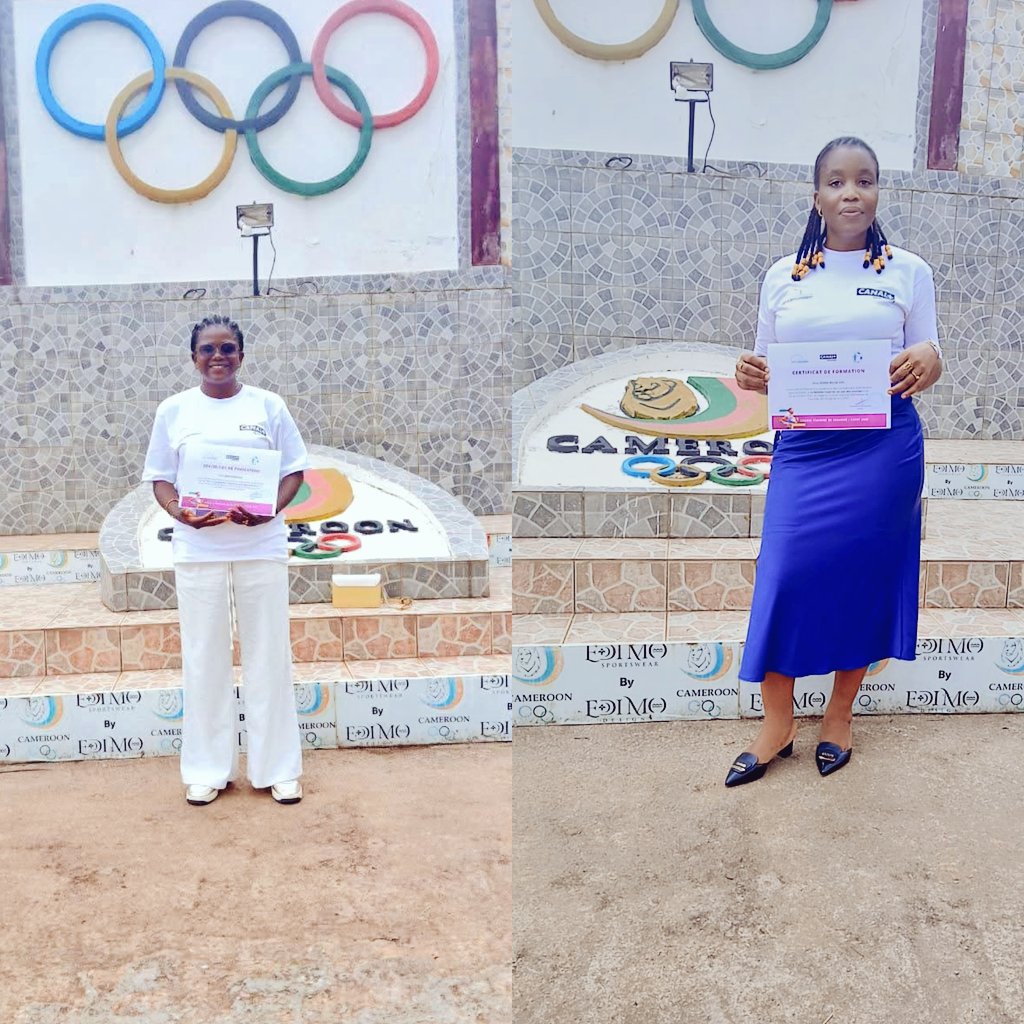
Beyond theoretical modules, the “Women Reporters on the Fast Track” workshop proved to be a real professional wake-up call for its participants. Balancing technical mastery and self-assertion, Sonita (Royal TV) and Diana Biloa Edo (Freelance) share their insights on this immersion that is changing their perspective on athletics.
If the goal of the SPODEV association and UFRESA was to create a professional electric shock, the reactions from the trainees confirm it was a success. For these media women, learning was not limited to concepts; it translated into concrete tools to shatter the “glass ceiling.”
Sonita (Royal TV): “Authority is Built Through Precision”
For the Royal TV journalist, meeting industry icons was a turning point. Deeply moved by the teachings of Emmanuel Gustave Samnick, she took away the lesson that credibility is the foundation of any career.
Being mentored by someone like Emmanuel Gustave Samnick is a huge advantage at this stage of my career. What stood out for me was the way he broke down the responsibility that comes with being a sports journalist,
she confides.
He made us understand that authority is not something you claim. It’s something you build over time through consistency, accuracy, and credibility.”
From now on, Sonita is approaching her TV reports with a more rigorous structure:
I want my audience to learn something new about athletics each time I’m on air. My reports will be more structured, more informative, and above all, more confident.”
Diana Biloa Edo: Ending Tautologies and Stepping Out of Football’s Shadow
On her end, freelance journalist Diana Biloa Edo particularly appreciated the end of linguistic approximations. Athletics is a science, and every meter counts.
The key takeaway for me was the technical language. I learned, for instance, that the 100m hurdles refers exclusively to a women’s event, while the 110m hurdles is for men. Simply mentioning these distances implicitly specifies the gender involved,”
she explains, noting that this will now prevent unnecessary tautologies in her reporting.
Beyond technique, Diana sees this training as a lever to change the game in a media landscape dominated by football.
My challenge is to promote sporting disciplines that have long been overshadowed by football in our country, and above all, to project my voice to carve out a place in an environment that is often unfavorable to women.”
A Shared Commitment: Highlighting the Human Element
Both journalists agree on one point: the necessity of telling the athlete’s story beyond just the performance. Among the tips shared by the trainers, Diana intends to place a special emphasis on
monitoring and showcasing athletes and their journeys in special programs.”
For Sonita, this involves total mastery of competition rules:
Paying attention to details like athletes’ timing, technique, and competition rules adds depth to my reports.”
These testimonies prove that specialization is the key for female journalists in Cameroon. By mastering the technical jargon and immersing themselves in the Olympic discipline of athletics, these reporters are no longer just following the race—they are taking a lead to become indispensable references in their respective newsrooms.

 French
  English