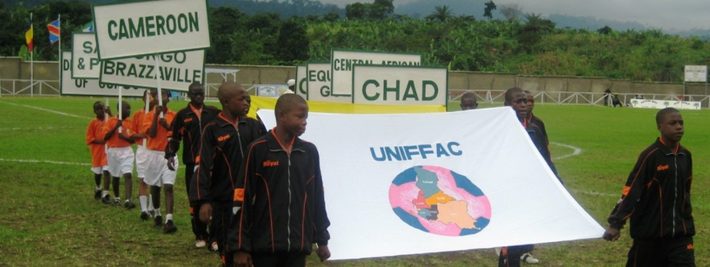
Tuesday, August 5, 2025, the Central African Football Federations’ Union (UNIFFAC) will convene a pivotal two‑day seminar aimed at accelerating the management and growth of women’s football across the sub-region.
Hosted in Douala, leaders will gather under one roof, including UNIFFAC’s interim Executive Director Remy Marthial N’nang and CAF’s Head of Women’s Football Meskerem Goshime—to chart a new strategic trajectory.
Why This Seminar Matters
UNIFFAC has demonstrated real momentum in women’s football. At the inaugural UNIFFAC Women’s Cup in 2020, Equatorial Guinea clinched the title, edging out DR Congo on penalties in the final tournament hosted in Mongomo and Ebibeyin.
Fast‑forward to February 2024: Cameroon hosted the maiden UNIFFAC U‑20 Women’s Cup. The Cameroonian Lionesses U‑20 stormed to the title, netting five goals in two matches and finishing with an unbeaten record against the Central African Republic and Congo.
On the club front, TP Mazembe (DR Congo) asserted dominance in August 2024, winning the UNIFFAC qualifier for the CAF Women’s Champions League and securing their second zone title, punching their ticket to the continental finals.
These milestones illustrate that while performances are rising, systemic support, governance, structure, and branding is still under construction across the zone.
Agenda Highlights: From Purpose to Performance
The gathering in Douala will move well beyond presentations; it’s a blueprint session for the future.
Participants will explore the overarching growth and evolution of women’s football in Africa, using the Central African context as both a mirror and a launching pad.
Discussions will tackle the core challenges facing the region from limited infrastructure and administrative inconsistencies to visibility gaps while spotlighting success stories and ongoing projects that hold promise for replication.
A major thrust of the seminar will focus on leadership at multiple levels. Attendees will be encouraged to reflect deeply on their personal motivations and roles in shaping women’s football, what organizers call “finding your WHY.” At the same time, the seminar will examine what it means to lead effectively at the Member Association level, with a compelling case study from the Comoros illustrating how strategic vision and committed governance can yield tangible results even in resource-constrained environments.
On a broader scale, the region will be asked to think collectively how can UNIFFAC, as a zone, define and implement a winning formula for women’s football?
This leads naturally into a hard look at where the organization stands today, through a comprehensive SWOT and gap analysis designed to lay the foundation for smarter, more targeted interventions.
Branding will also take center stage. What should UNIFFAC’s women’s football identity look and feel like? How can the zone create a visible, empowering, and sustainable brand—one that speaks to players, fans, sponsors, and media alike? The discussion will probe not just aesthetics but strategy: tone, image, and long-term positioning.
Finally, the seminar will culminate in action planning. Organizers are pushing for practical steps that turn ideas into implementation.
UNIFFAC’s Roadmap: Turning Promises into Power
The seminar is no academic exercise. It represents a strategic leap forward:
Establish strong administrative foundations in each Member Association, modeled on successful case studies.
Solidify a UNIFFAC-wide identity, bringing cohesion across national leagues and youth development initiatives.
Shape a brand experience that attracts sponsors, engages media, and empowers players and fans alike—beyond just match days.
Why the Timing Is Crucial
Despite impressive first steps tournaments and club performances—women’s football in Central Africa remains underdeveloped when one factors its potential. UNIFFAC has an opportunity to position itself as a leader.
With CAF increasingly investing in women’s competitions and clubs like TP Mazembe gaining continental traction, this is an ideal moment for UNIFFAC to consolidate gains, professionalize its approach, and make women’s football a regional powerhouse.
What unfolds in Douala will shape UNIFFAC’s ambition to turn sporadic success into sustained excellence. This seminar backed by strategy and powered by unity is more than talk. It’s a turning point. UNIFFAC’s future strategy will determine whether Central African women’s football can finally rise, compete, and inspire the continent.

 English
  French