By Neilley Claude EBESSA
Journalist kick442.com – Cameroon
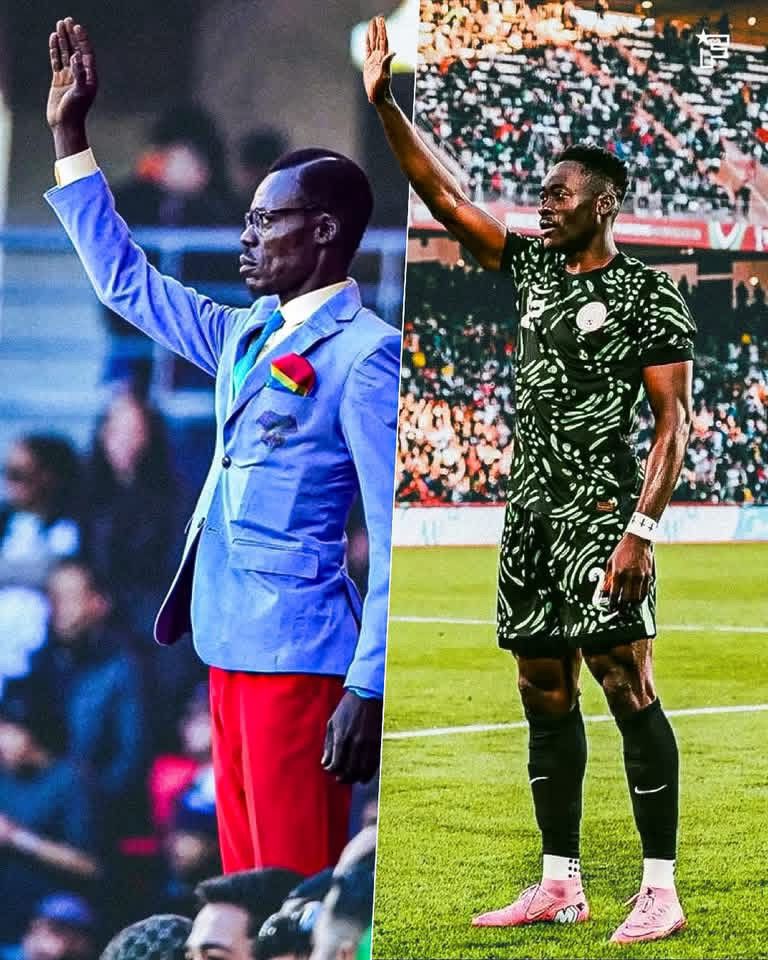
When Akor Adams found the back of the net against Algeria for Nigeria’s second goal in the AFCON quarter-final, the goal itself mattered. It pushed Nigeria closer to silverware and lifted teammates and fans alike. But what followed mattered even more. Instead of a roar or a run to the corner flag, Adams froze. Right arm raised, body still — a pose instantly recognisable across the continent as the legendary posture of Congolese superfan Michel Nkuka Mboladinga, famously known as “Lumumba.” In that moment, a football match became a message.
Just days earlier, Lumumba had been thrust into controversy after Algerian forward Mohamed Amoura mocked the same posture following DR Congo’s elimination by Algeria. What many saw as ridicule of a man honouring Congolese independence hero Patrice Lumumba sparked anger, debate, and reflection across African football. Akor Adams chose a different response. By recreating the posture on one of AFCON’s biggest stages — after scoring against the same Algerian opposition — Adams reclaimed the symbol, transforming it from an object of mockery into one of respect and solidarity.
There was no speech. No explanation. None was needed. The celebration spoke for itself: a Nigerian international honouring a Congolese fan, acknowledging African history, and reminding the football world that symbols matter. Cameras zoomed in. Social media erupted. Fans instantly connected the dots. It was not taunting. It was not provocation. It was tribute.
AFCON has always been about more than ninety minutes. It is about identity, memory, and shared struggle. Lumumba’s presence in the stands captured that spirit, and Akor Adams’ celebration carried it onto the pitch. In a tournament often defined by rivalries, the Nigerian striker offered something rarer: empathy.
As Nigeria marches on in the competition, Adams’ goal will be logged in the record books. But his celebration will live elsewhere — in the moments that remind us why African football resonates so deeply. Because sometimes, the most powerful goals are the ones that stand for something.

 English
  French